Wednesday, July 1, 2009

Origin of imports and destination of exports

In the early 1990s, the United States of America took the largest share of Turkish exports (over 55 percent), followed by EU countries (about 25 percent). Over time, the share of the United States has declined to about 30 percent and the share of EU countries increased to nearly 40 percent.
The major importers of Turkey’s tobacco are now the United States, Canada, France, Switzerland, Zimbabwe, Malawi, South Africa and Germany. In 1990, Turkey imported almost all its tobacco from the United States.
Turkey is a net importer of tobacco from the United States, Switzerland, France, Canada, Zimbabwe, Malawi and South Africa, and net exporter to the remainder.

Wednesday, June 24, 2009

Manufacturing, marketing, promotion and health consequences

The two injunctions at issue sufficiently specify the activities enjoined as to provide Defendants with fair notice of the prohibited conduct. The district court did not abstractly enjoin Defendants from violating RICO or making false statements, but instead specified the matters about which Defendants are to avoid making false statements or committing racketeering acts: the manufacturing, marketing, promotion, health consequences, and sale of cigarettes, along with related issues that Defendants have reason to know are of concern to cigarette consumers.
This is not a generalized injunction to obey the law, especially when read in the context of the district court’s legal conclusions and 4,088 findings of fact about fraud in the manufacture, promotion, and sale of cigarettes. These injunctions may be broad, but breadth is warranted “to prevent further violations where a proclivity for unlawful 68 conduct has been shown.”
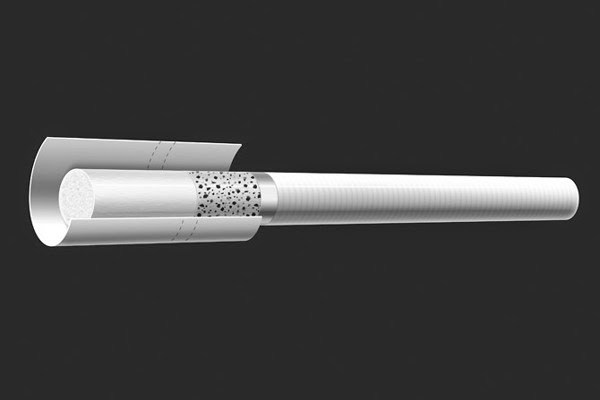
Defendants complain that the volume of findings in this case actually make understanding the injunctions more difficult and chill speech because some of the district court’s findings present “express prohibitions” whereas others, like the use of white filter paper for cigarettes, “simply reflect the district court’s disapproval” of aspects of Defendants’ business practices without finding the conduct fraudulent.
This objection answers itself, as the plain terms of the injunctions prohibit only conduct that would constitute a racketeering act or a “material false, misleading, or deceptive statement or representation,” not all activities the court mentioned in its findings.

Wednesday, June 17, 2009

Defendants liability

Defendants complain that the district court failed to identify the racketeering acts that support the finding of liability. While 27 it is true the district court’s opinion provided no single, discrete list of specific racketeering acts, the comprehensive findings— detailing over one-hundred racketeering acts—are sufficient to warrant affirmance.
Defendants raise numerous challenges to the correctness of the district court’s findings that they committed racketeering acts, which we take up in Parts III and IV. In this section, however, we are concerned only with the existence of these findings, not their validity. By statutory definition, any violation of the mail or wire fraud statutes can qualify as “racketeering activity.”
To prove a violation of the mail and wire fraud statutes, the government must show a scheme or artifice to defraud and a mailing or wire transmission in furtherance thereof. “Where one scheme involves several mailings, the law is settled that each mailing constitutes a violation of the statute.”
Where, as here, the mail and wire fraud statutes serve as the predicate offenses for a RICO violation, each racketeering act must be a mailing or wire transmission made in furtherance of a “scheme or artifice to defraud.” Thus, in order to identify the racketeering acts, the district court must first have found a scheme to defraud, then concluded the alleged mailings or wire transmissions were in furtherance of such scheme.

Tuesday, June 9, 2009

Kiss flavour


Tuesday, June 2, 2009

Few tobacco users get the help they need to quit

Many tobacco users want to quit to save their own lives and to protect the health of their families, but are unable to because of their addiction to nicotine. The vast majority of countries do not help tobacco users who want to quit. Currently, only nine of 173 Member State respondents offer the highest assessed level of support, which includes a full range of treatment and at least partial financial subsidies. These countries account for a mere 5% of the world’s population – meaning that the remaining 95% do not have access to treatment for tobacco dependence.

There is a wide range of effective cessation services, including brief routine advice from health-care workers, quit lines, and medications made available through retail stores if not provided directly by either health-care or public health programmes. Currently, 22 countries offer tobacco users no help at all in the form of basic services such as counselling or pharmacotherapy. It is impossible for people to obtain nicotine replacement therapy at all in 39 countries, even if they have the means to pay for it themselves. Quit lines are fairly inexpensive and within the means of many countries, yet only 44 countries, covering less than two fifths of the world’s population, provide them.

Monday, May 25, 2009

Regal Cigarettes


You don't need to be a rocket scientist to appreciate that the cigarette ads on the posters illustrated below were not penned with mature individuals in mind. But, admittedly, there is nothing definitive that would lead one to conclude they were intended for children. On occasions the words or phrases are somewhat trendy - the word squillions did make it into the terminology of trendy late teens and young adults in the late 1990's. However, even although it could be argued that most of these lines were written with adults in mind, it is much more likely that they originated in brainstorming sessions among 'creative' advertising personnel only too aware that their client tobacco companies need to catch their customers young.
Most cheap brands make use of similar devices, focussing on adolescent humour or unusually unsophisticated use of language and visuals. These are sufficient to circumvent the ASA guidelines on advertising to minors. This technique developed because the tobacco company message to ad agencies is simple. " Pitch the campaign as if it were directed towards adults. It will therefore get past the Advertising Standards Authority when they evaluate the ad campaign at the concept stage. But, as our target audience falls into a younger age group, ensure that the message will also appeal to under age kids. "
Cartoon type characters such as Regal's Reg were banned in the UK some years ago because of their obvious appeal to underage and unsophisticated smokers. There would be extreme concern if UK companies made any overt attempts to 'import' characters such as the cute Camels featured in Camel ads (see Viva España and Camel pages). For the same reasons beware imported magazines. The Yanks page considers the extent to which British audiences are now exposed to American ads for cigarettes. British ads for cigarettes have clear cut guidelines as to what is and is not permissible. Ads thus have to be carefully tailored to appeal to underage smokers whilst appeaing to be directed towards adults with a preference for the cheaper branded cigarettes.

Monday, May 18, 2009

French Cigarettes


CIGARETTES DE LA REGIE FRANCAISE (1939-1981)
France established a State Tobacco Monopoly in the seventeenth century, and like most tobacco monopolies, it inhibited development of new brands. When one thinks of French cigarettes, two brands come to mind--Gauloises and Gitanes. Gauloises were introduced in 1910, then redesigned in 1936 to feature the famous winged Gallic helmet logo. While Gitanes (Gypsies) was also launched in 1910, the classic blue design of a dancer with her tambourine, dates from 1943.

Harris Lewine, in his entertaining but slightly pre-mature 1970 book, Good-Bye to All That, describes the Gauloises family of cigarettes as the strongest of families--they're "loosely packed, forever going out!".

Tuesday, May 5, 2009

MARLBORO MAN Cowboy smokes cigarette Ad '61

1961 Marlboro Cigarette Man Tattoo Hand 2-Page Ad - Why don’t you settle back with a Marlboro the filter cigarette with the unfiltered taste. It takes mighty good makin’s to give you unfiltered taste in a filter cigarette. That’s the flavor you get in the famous Marlboro recipe from Richmond, Virginia. Plenty rich, plenty mild through the pure white Selectrate filter. Settle back and enjoy a Marlboro. YOU GET A LOT TO LIKE

1961 Marlboro Cigarette Man Painting Ad
You get a lot to like with a Marlboro -the filter cigarette with the unfiltered taste Why don’t you settle back and have a full-flavored smoke?

1961 Marlboro Man Cigarette 2-Page Ad - YOU GET A LOT TO LIKE With a Marlboro -the filter cigarette with the unfiltered taste Why don’t you settle back and have a full-flavored smoke? 1961 Marlboro Man Cigarette 2-Page Ad
YOU GET A LOT TO LIKE With a Marlboro -the filter cigarette with the unfiltered taste Why don’t you settle back and have a full-flavored smoke?

1961 Marlboro Cigarette Man Tattoo Hand 2-Page Ad
Why don’t you settle back with a Marlboro the filter cigarette with the unfiltered taste. It takes mighty good makin’s to give you unfiltered taste in a filter cigarette. That’s the flavor you get in the famous Marlboro recipe from Richmond, Virginia. Plenty rich, plenty mild through the pure white Selectrate filter. Settle back and enjoy a Marlboro. YOU GET A LOT TO LIKE

MARLBORO MAN Cowboy smokes cigarette Ad '61
You get a lot to like with a Marlboro the filter cigarette with the unfiltered taste. It takes mighty good makin’s to give you unfiltered taste in a filter cigarette. That’s the flavor you get in the famous Marlboro recipe from Richmond, Virginia. Plenty rich, plenty mild through the pure white Selectrate filter. Settle back and enjoy a Marlboro. Why don’t you settle back and have a full-flavored smoke?

MARLBORO MAN Cowboy smokes cigarette Ad '61 - You get a lot to like with a Marlboro the filter cigarette with the unfiltered taste. It takes mighty good makin’s to give you unfiltered taste in a filter cigarette. That’s the flavor you get in the famous Marlboro recipe from Richmond, Virginia. Plenty rich, plenty mild through the pure white Selectrate filter. Settle back and enjoy a Marlboro. Why don’t you settle back and have a full-flavored smoke?

Thursday, April 30, 2009

IN ADVERTISING IT'S SPLENDID!


Throughout the Great Depression the major cigarette manufacturers continued to advertise their most popular brands with handsome ads created by talented illustrators. A few of the popular commercial artists received commissions for this work, but advertising agency staff artists were responsible for the bulk of the paintings. Continuity in advertising is a method where an ad is related to the one that preceded it. Usually, a new argument or reason to buy the product is presented. A campaign is finished when all arguments have been exhausted. The series that the wonderful two page magazine ad pictured below was part of, reminds the reader that with Chesterfields "it's Taste!" Other ads in this campaign pointed out that "in polo it's Dash," "at the horse show it's Form," "on the green it's Accuracy!" and "in the dance it's Grace!"

Thursday, April 23, 2009

Altria Group 1Q profit drops but beats forecast

Cigarette sales dropped 8 percent and profit slipped at the nation's largest tobacco maker, Altria Group Inc., as retailers and wholesalers cut their orders ahead of a one-time federal tax on their inventory, but the company's overall revenue rose in the first quarter.

Tobacco sellers had to pay a "floor" tax of 62 cents per pack on whatever they had on hand before a 62-cent-per-pack retail sales tax went into effect April 1.

The company reported Wednesday that, including interest expenses, charges related to acquiring smokeless tobacco maker UST Inc. and the effects of spinning off Altria's international tobacco business as Philip Morris International, its first-quarter profit slid 76 percent, to $589 million, or 28 cents per share, for the quarter that ended March 31. A year earlier, it earned $2.45 billion, or $1.16 per share.

Excluding those one-time expenses, Altria's earnings rose 5.4 percent to 39 cents per share, meeting the average estimate of Wall Street analysts surveyed by Thomson Reuters.

Revenue rose 2.6 percent from a year earlier to $4.52 billion. Analysts forecast revenue of $3.99 billion for the quarter.

Sales of cigars — which weren't covered by the floor tax, and rose in the quarter — helped offset the cigarette sales decline, as did higher prices across the product lineup of the Richmond-based maker of Marlboro, Parliament and Virginia Slims.

Executives hope cigar and smokeless tobacco sales also will help offset the decline in cigarette sales to consumers, who are continuing to cut back due to smoking bans, health concerns and higher prices.

Altria's shares rose 12 cents, less than 1 percent, to $16.85 in afternoon trading.

"It's fair to categorize our first-quarter performance as 'so far, so good,'" Chief Executive Michael E. Szymanczyk said in a conference call with investors.

Much of the revenue increase came from strong sales of Altria's Black & Mild cigars and from UST, the maker of Copenhagen and Skoal. Sales of cigars jumped 26 percent due to higher prices and higher volume.

Revenue in the company's financial services division also rose substantially.

And the 8 percent slip in cigarette sales to $3.9 billion was partially offset by higher prices and lower promotional allowance rates.

In a note to investors, Deutsche Bank North America analyst Marc Greenberg said Altria "has overcome what is likely to be its biggest hurdle" for the year in regard to the inventory rundown.

By volume, Philip Morris USA reported declines among all cigarette brands, including Marlboro, Parliament, Virginia Slims and Basic. Its Marlboro brand, the best-selling cigarette in the U.S., gained 0.5 points of market share to end up with 42.4 percent of the U.S. market, according to data from Information Resources Inc.

"We continue to believe (Philip Morris) USA will produce profit growth for the year; however, the reaction to the pricing will be key in determining the reality of this goal," Stifel Nicolaus & Co. analyst Christopher Growe said in a note to investors.

He called Marlboro's performance "impressive."

Altria said the net price for a pack of Marlboros in the quarter was $4.50 compared with the lowest-priced pack of cigarettes, which was $3.14. But the company said the gap narrowed toward the end of the quarter as retail prices continued to adjust in advance of the federal tax increase.

Like other U.S. tobacco companies, Altria is focusing on cigarette alternatives — such as cigars, snuff and chewing tobacco — for future sales growth because domestic cigarette consumption is falling 3 percent to 4 percent a year.

The company said it believes volume in the smokeless tobacco industry as a whole grew 6 percent to 7 percent in the quarter compared with the same period a year earlier, and machine-made large-cigar volume grew 4 percent compared with a year earlier.

Altria also offered full-year profit guidance of between $1.70 and $1.75 per share for continuing operations excluding one-time charges. That's up from $1.65 per share on that basis in 2008. Analysts, whose estimates typically exclude special items and discontinued operations, predict profit of $1.73 per share.

Thursday, April 16, 2009

History of Lucky Strike Cigarettes

The brand was introduced by R.A. Patterson of Richmond, Virginia, in 1871 as a cut-plug chewing tobacco and later a cigarette. In 1905, the company was acquired by the American Tobacco Company (ATC), and Lucky Strike Cigarettes would later prove to be its answer to R.J. Reynolds' Camel.

In 1917, the brand started using the slogan "It's Toasted" to inform consumers about the manufacturing method in which the tobacco is toasted rather than sun-dried. Because of this different manufacturing process, Lucky Strike Cigarettes are said to have a unique and distinctive flavor. The message "L.S.M.F.T." ("Lucky Strike means fine tobacco") was introduced on the package in the same year.

In 1935, ATC began to sponsor Your Hit Parade, featuring North Carolina tobacco auctioneer Speed Riggs. The weekly radio show's countdown catapulted the brand's success and would remain popular for 25 years. The shows capitalized on the tobacco auction theme and each ended with the signature phrase "Sold, American".

Thursday, April 9, 2009

The most important cigar model of montecristo

The most important cigar model of montecristo:
The Montecristo No.4 Reserva 2007 pays tribute to the Montecristo No. 4; the worlds most popular Havana cigar. Since its launch in 1935 the Cubans have produced the unfathomable amount of over one billion Montecristo No.4 cigars - more than 7500 tons of first class tobacco. Manufactured with tobacco leaves specially selected and carefully aged for three years gives the Montecristo No.4 Reserva 2007 a unique quality which sets them apart from other Montecristo releases. These cigars come packaged in luxury black lacquered cases and are a special release of only 5000 numbered boxes. The 20 double banded cigars look regal in both the Montecristo and Reserva specific ring bands.

Thursday, April 2, 2009

New George Karelias and Sons brand

As the traditional “Kasetina” was the stimulation for the new George Karelias and Sons brand, Karelia designers used the same box configuration to create a premium cigarette brand that evoked the companys long history and knowledge and communicated the very high quality of the tobacco blend.
George Karelias cigarettes are mostly sold within Greece and Europe, but our online tobacco store breaks the bounds and discovers new possibilities for you. Nowadays, opportunely you may find any cigarette brand in our cigarette online shop and Karelia cigarettes are not the exception.
Growing numbers of consumers seeking lifes finer pleasures are discovering Karelias tradition of exclusive quality and unmatched flavor.

Wednesday, March 25, 2009

Sobranie become in style among smokers

Sobranie has become in style among smokers because of its fine components and exceptional way of preparing the tobacco. The cigarettes manufactured by this company are of the best quality is recognized by the smokers all over the world. Its exclusive taste and special aroma make it highly recognized in the tobacco markets today. Gallaher Group distributes their cigarettes to United Kingdom and Europe, some parts of Central Asia, Africa and the Middle East. It was first established in London in 1879.
Sobranie cigarettes were first of all produced in Ukraine and since 2005 in Russia. These cigarettes are the most expensive Russian cigarettes that have a leading place on the tobacco market.
Today, it still produced at Old Bond Street in London. Sobraine can be balanced to Dunhill cigarettes because it is considered to be one of the most expensive cigarette brands particularly in Russia.

Wednesday, March 18, 2009

Camel Menthol Lights - designed by Scott Campbell

Tuesday, March 10, 2009

Parliament Cigarettes on the national market

According to Business Analytica, on the basis of sales for the first eight months of 2008 the proportion of Parliament Cigarettes on the national market by volume was 2.1% . General Director of Business Analytica believes that the sale Philip Morris is not aimed at increasing sales. "Usually, these flags are purely branding and aimed at enhancing the loyalty of certain stratum. when limited series, the desire to buy the product gets bigger. Most of the people who smoke cigarettes premium, for reasonable money feel that they are involved in the highest category, based on this big impression part of these campaigns.

"It is possible that if the number of subscribers will increase Parliament Reserve start to the public.

If the project does not justify itself, the company may terminate its sales of publicity without risking its failure. When promoting new series is doomed to success. "Many producers have brands, which are sold through private subscription. example, Treasurer tutu in aluminium (cigarette company vypuskayuschiesya Chancellor Tobacco), faces even more expensive - about $ 30 - and have a steady demand.

Wednesday, March 4, 2009

Camel on life

camel
Explore more and open up new horizons!

Monday, February 23, 2009

New version of Marlboro cigarettes

The new version, called the Marlboro cigarettes Special Blend will be sold only packages in supermarkets from 19 November to the end of the year. Company for the first time, is aimed at "creating disturbances in the market among the loyal Marlboro Cigarettes smokers, as well as" konkurentososobnyh "smokers" - said Billy Ebshou, media manager of Philip Morris.
Advertising support new varieties of cigarettes is not available, although the company is going to distribute them and direct postal delivery, through the trade press and promotion in the field of sales. Mr. Ebshou said that the Philip Morris company has no plans to sell the new cigarettes in periods other than the November-December. Marlboro Cigarettes - the best in the country for sales. Last year, they held 37.7% market share, alleged the tobacco industry in the research journal The Maxwell Report.
"They worked on a consistent line of brand extension" - said Marc Cohen, Goldman Sachs analyst company. Last year the company produced cigarettes Philip Morris Marlboro Milds, something in between Marlboro Menthols and Marlboro Light Menthols. Although Mr. Cohen is not familiar with the taste of Marlboro Special Blend, he said that "not a bad idea. This is one way of adding something special."
New cigarette Marlboro Special Blends made of different from the normally used for Marlboro Cigarettes blends will be sold as usual, and in lightweight versions in a totally black package. Packing conventional cigarettes taste will profigachena krasnenkimi same red letters and "M" and the triangle in the center, and a leaner version of the "M" and the triangle in the center will be gold, "- said Mr. Ebshou.

Wednesday, February 18, 2009

American Tobacco cigarettes Vogue

The efforts of British American Tobacco cigarette Vogue Cigarettes firmly linked in the minds of smoking with subtle way lady, secular lions. Until two years ago, this brand image helped retain the position of leader. And then it turned out that the classic style Vogue Cigarettes - the reason for the refusal of young buyers of this brand of cigarettes. From the effectiveness of the BAT on restarts Vogue Cigarettes will determine whether the brand will repeat the fate of Kent, who became the market leader after brand, or "Java Gold," not even uvelichivshey sales.

Rebrendingom Vogue company BAT agreed not to engage in idle traction to the glamour. Segment cigarettes super slims (thin cigarettes with a diameter of about 4.5 mm) was evolving rapidly. According to estimates of industry analysts Internet portal Russian tobacco "if last year in Russia were sold 6.27 billion cigarettes class super slims, this year may be weaker sex Trump has 9.5 billion pieces. On the heels BAT, the leader segment occurred uncompromising competitors. For example, Esse cigarettes produced by the Korean company Korea Tobacco & Ginsen, for a year and a half almost caught up with the Brits in the physical volume of sales in Russia.

Tuesday, February 10, 2009

Gold cigarettes


Tuesday, February 3, 2009

Is Cigarette Tax a problem?

I've been reading and hearing a lot of opinions about the extra dollar per pack tax on cigarettes and it reminds me of what we were taught in school about how America first became a country of its own. The English were charging too much tax on tea and there was a term called taxation without representation.
Shouldn't we tax hamburgers, French fries, doughnuts and candy bars, and anything else fattening? Then we can tax things with too much salt or caffeine.
Do you see where this is going? You can't fairly tax one thing more than another, and the real problem is the budget and the lack of revenue and it's not fair to pick one group of the population to bail out the rest.
The government can't manage the budget with the taxes they have now and can't cut anymore then raise taxes on everything evenly.

Thursday, January 29, 2009

Big boost in tobacco tax

The fast-growing group of big names endorsing a big increase in the state tax on online cigarettes tobacco products can add the founder of the Huntsman Cancer Institute.
Jon Huntsman Sr., the philanthropist and businessman who has donated more than $350 million of his wealth to underwrite research, treatment and prevention of cancers, said Friday the tax is another tool in the fight against what he called "this horrifying disease."
Speaking in the top-floor auditorium of the newest addition to the cancer research center that bears his name and employs 1,600 researchers and staff, Huntsman said institute research has helped make some remarkable advances in the nature and course of cancers.
With each revelation comes more evidence that tobacco use, particularly smoking, is a leading environmental cause of several cancers.
"It's not just lung cancer," Huntsman said, noting that his own father's death was no doubt hastened by smoking. "There are multiple hazards serious enough that you have at best a 50-50 chance of not only getting sick but dying from smoking-related complications."
Huntsman, who has had pancreatic cancer, said life in general is pretty risky and no one gets through it without some kind serious health problem.

Wednesday, January 21, 2009

Obama And Cigarettes

In tonight's Web-only Inauguration wrap-up, Katie Couric mentioned a question she asked President Barack Obama in an interview shown in tonight's prime-time special, "Change and Challenge: The Inauguration of Barack Obama." It was about a subject that’s still a little touchy to him: cigarettes smoking.
COURIC: You don't really think of this job as working at home, do you, necessarily (laughter). But speaking of stress, what's going on with the discount cigarettes smoking thing?
PRES. OBAMA: You know, we're doing fine with it. I know everybody likes to poke, you know. I haven't had an interview yet where this one doesn't get raised.
COURIC: Well, I think people just wanna know how it's going. And I think – they feel for you.
PRES. OBAMA: Yeah, we're doing fine. I'll do better if people don't keep on bringing it up
So Couric asked Politico.com's Mike Allen if he could read anything between the lines of Mr. Obama's answer, such as, that he still is wrestling with the habit.
Allen concurred that it's possible, but suggested that perhaps we might all go a bit easier on the new president. After all, he spent an altogether frantic day looking completely cool, poised and collected.
"If you look at the way President Obama has handled himself and the way he's been portrayed, I'm happy he has a few faults, weaknesses," Allen laughed. "That shirtless photo op sure gives guys a lot to worry about. I'm happy he has a few hidden habits like that."
Plus, Couric said: "You also do have to appreciate that the guy's under a lot of pressure."
Allen added a zinger: "If he wants to get in his Audi* and have a cigarette, he ought to be able to."

Tuesday, August 12, 2008

Tobacco money

BRISTOL, Va. – The Virginia Tobacco Commission is poised to approve spending $12 million to establish a pair of energy research centers in the region, its vice chairman said Monday.
The centers, planned for Abingdon and Wise, would study clean coal and other environmentally friendly technologies, said state Delegate Terry Kilgore, R-Gate City, vice chairman of the state’s Tobacco Indemnification and Community Revitalization Commission.
The centers are among eight special projects and research center requests previously reviewed by commission members. Other energy research centers – costing a combined $16 million – also are expected to receive funding when the 31-member commission meets here Wednesday and Thursday, Kilgore said.
“This is something the time has come for us to do,” Kilgore said in a phone interview with the Herald Courier. “We need to look at clean energy and clean-coal technologies.”

During its Thursday meeting, the commission will be asked to approve $8 million to establish the Southwest Virginia Clean Energy Research and Development Center. It would be housed in a 16,000-square-foot building to be constructed at the Southwest Virginia Higher Education Center on the campus of Virginia Highlands Community College in Abingdon.
The center is expected to employ about 20 by its third year, have an annual operating budget of more than $7 million and generate more than $11 million in annual economic impact, according to commission documents.
“We hope to get that project funded and help it become a reality,” said Kenneth Reynolds, a commission member and chairman of the Washington County Board of Supervisors.
“With energy costs so high, if we can be part of helping develop new sources of energy, I think it has a lot of potential.”
The commission also is expected to consider a $4 million appropriation to design, construct and open an Appalachia America Energy Research Center at the Lonesome Pine Technology Park in Wise.
That center would include nearly 25,000 square feet dedicated to clean-coal technology, converting coal to liquid fuels, mercury remediation and reducing sulfur levels.
Other energy sources, including solar power and the production of hydrogen gas, also might be studied.
NanoChemonics, a firm based in Pulaski, Va., has committed to locating at the facility and towork with universities and corporate partners in mining and energy industries, commission documents show.
The commission’s appropriation equals about half the total funding for that project and follows an earlier $1 million allocation for site development. Additional funding is expected from the Wise County Industrial Development Authority and the Virginia Coalfield Economic Development Authority.

Other energy research centers and funding proposals the commission will consider include:

* $8.07 million to establish a sustainable energy research center in Danville.

* $7.69 million to establish a nuclear energy research center in Bedford County.

* $873,845 in additional funding for a Gretna, Va., facility that converts crops into bio-diesel fuel.


Funding requests are expected to go before the full commission at its Thursday meeting. On Wednesday, commissioners are expected to consider a recent report critical of some of its funding decisions, Kilgore said.
The blue ribbon panel’s report was critical because the commission does not have methods in place to measure the overall return on its investments.

“We’ll review the blue ribbon commission’s findings and talk about those concerns,” Kilgore said.
All meetings are open to the public and will be held at the Holiday Inn near Interstate 81’s Exit 7.

Friday, July 18, 2008

EU wants 8.1 per cent rise in cigarette prices by 2014


Maltese smokers will have to fork out more money to keep puffing in the next few years as the European Commission yesterday laid out new plans aimed at narrowing the difference in price levels of tobacco products in the 27 member states while cutting tobacco consumption.

According to computations made by the EU, the price of a packet of standard cigarettes in Malta will have to increase by 8.1 per cent by 2014 in order to conform to the new rules on minimum taxation of tobacco products. At the same time, Brussels said that the increase in price in Malta should contribute to a reduction of 3.5 per cent in demand. The new proposed directive will need the green light of all the 27 EU member states in order to enter into force.

Smokers in the new EU member states are likely to be the most affected as taxes on cigarettes in these countries are still considered to be very low when compared to the EU average. Malta is however an exception as retail prices are already close to the average price in the EU. Currently, 60.82 per cent of the price of a packet of cigarettes goes to the Exchequer in excise duty and VAT. Still, the EU say this is not enough.

According to the EU, its proposal, part of a four-year review of tobacco duties, would reduce smuggling.

The Commission's primary tool would be to increase the minimum tax that member states impose on cigarettes.

At present, this minimum has two elements: the tax levied as a percentage of a packet's price, which must translate into a minimum price per 1,000 cigarettes. As a percentage, tax would have to rise from 57 per cent to 63 per cent by 2014 or from €64 per 1,000 cigarettes in the most popular price category to €90 for all categories.

Duties on loose-leaf tobacco would also be hiked to bring them more closely into line with those imposed on cigarettes.

A second element in the EU's plan is to tighten definitions of tobacco products because, during the past years, manufacturers have been able to re-classify products in order to quality for lower taxes.

Although through this new directive Maltese smokers would be badly hit, the impact on fellow smokers in some of the other new member states would be dramatic. According to EU calculations, while in countries like Denmark or Finland the price increase will be of about six per cent, in countries like Poland it will rise by 46 per cent.

Statistics show that in the five-year period between 2002 and 2006, excise duties in the EU rose by 33 per cent on average and cigarette consumption dropped 10 per cent.

Monday, July 14, 2008

UK tobacco case

LONDON - Six companies will pay a maximum of 173.3 million pounds ($342.5 million) after admitting unlawful practices relating to the retail price of cigarettes in the UK, under a deal with Britain's Office of Fair Trading (OFT).

Japan Tobacco said its Gallaher unit had agreed to pay 93 million pounds for taking part in anti-competitive practices during 2000 to 2003, before the Tokyo-based cigarette group bought the British tobacco company in 2007.

The other five groups, all retailers, were Wal-Mart-owned Asda, First Quench, One Stop Stores (formerly called T&S Stores), Somerfield and TM Retail, a statement by the British regulator said on Friday.

A number of the six parties had previously applied to the OFT for leniency and the total penalties the groups agreed to pay, if all leniency and early resolution discounts are given, is 132.2 million pounds, rather that the pre-discount penalties total of 173.3 million pounds, the OFT said.

The OFT did not say when a final decision on the level of fines would be taken.

The regulator added that supermarket group Sainsbury Plc was the first to apply to the OFT for leniency and will receive complete immunity if it continues to co-operate.

Investigations will continue against Imperial Tobacco Plc, Shell and retailers Morrisons, Morrisons-owned Safeway, Tesco and the Co-operative Group, the OFT said.

Imperial Tobacco said in a statement it had not admitted to any infringement of competition law and had not acted in any way contrary to the interests of consumers. It said it would continue to co-operate with the OFT. (Editing by Mike Elliott and David Holmes)

Philip Morris test new filter Marlboro cigarettes


Philip Morris USA, the No. 1 U.S. tobacco company, said Monday it has ended test markets of Marlboro-branded cigarettes that use a high-technology filter.

The operating company of Altria Group Inc. said it pulled the plug on Marlboro Ultra Smooth and Marlboro Ultra Light cigarettes, which used an activated carbon filter to deliver nicotine with potentially less exposure to carcinogens than in conventional cigarettes.

Philip Morris said it stopped making new shipments of Marlboro Ultra Smooth to wholesalers on April 1. Those cigarettes were being tested in Atlanta, Tampa (Florida), and Salt Lake City for more than three years. Marlboro Ultra Lights in Phoenix and North Dakota, and Basic Ultra Lights in Washington state also were discontinued, the company said.

"We did see lower consumer acceptance of those products in some of the test markets," said spokesman Bill Phelps. "These are test markets and they're designed to help us learn a lot of things. In the case of Ultra Smooth, it was designed to help us understand consumer acceptance of those particular products' taste and flavor."

Phelps said the company had made no claims that the products reduced health risks.

Shares of Altria rose 18 cents to $20.96 in midday trading.

Philip Morris saw a 4.6 percent decline in cigarette sales volume last year, but said that is estimated to be down 3.6 percent when adjusted for calendar differences and other factors. The industrywide decline is estimated at 4 percent in the United States.

The company has projected that cigarette sales volume will fall between 2.5 percent to 3 percent in the U.S. over the next few years because of concerns about health, smoking bans and price increases.

In turn, Philip Morris is looking to growing its business in other tobacco categories and reduced-risk products, Phelps said.

"We remain committed to our overall objective of reducing the harm caused by cigarette smoking," Phelps said. "That work will continue both for conventional lit-end cigarettes as well as what we would describe as noncombustible tobacco products."

Last year, the company began testing of its Marlboro-branded moist smokeless tobacco product — cut tobacco placed in the mouth — in Atlanta and recently expanded to counties in the surrounding metropolitan area. It also began testing a moist powdered tobacco called Marlboro Snus in Dallas last year, and also has expanded the test to Indianapolis.

Friday, July 4, 2008

Are Electronic Cigarettes Better For Your Health?


Ontario's anti-smoking law is one of the toughest in the country. So is Toronto's own bylaw.
Both ban smoking in offices and enclosed spaces. And both force puffers to head outside for a butt - even in the dead of a -30C winter or the heat of a 40-plus humidex.
Smokers have been forced to grin and bear it all these years, while crying they've been discriminated against. And many have been looking for loopholes to get around the all encompassing bans. And now some think they've found it, thanks to an electronic cigarette.
They're made by a company called Crown Seven. The user puts a nicotine capsule inside, then puffs on one end. The other end lights up just like cigarettes even though this product does not burn.
The gizmo delivers a hit of nicotine but lets out a puff of odourless water vapour instead of a plume of smoke. It only contains nicotine and not the hundreds of other chemicals that can be in a standard smoke.
It comes with a rechargeable battery that heats up the liquid nicotine and turns it into a gas. And since it's not technically cigarettes and doesn't threaten anyone else's airway, it may not fall under the strict laws regarding indoor puffing. But how does it taste?
"It's got a bit of a bite, sort of tobacco-like bite but it doesn't really taste like tobacco," reports volunteer Leo Jablonski.
They're for sale all over the Internet at a range of strengths and prices, and advocates insist they have lots of benefits. There's no chance of fire since you don't light them, they don't stain your teeth, there's no second-hand smoke and they may make quitting easier.
But vendors also claim they don't harm your health because the tar and smoke that comes with normal coffin nails isn't present.
"I think people need to be cautious," warns Dr Roberta Ferrence, director of the Ontario Tobacco Research Unit. "It's an unknown."
"The concern is that the product will probably be promoted as something that's safer than smoking," she adds.
Dr Ferrence doesn't think they're safe at all.
In an interview with CityNews Medical Specialist Dr Karl Kabasele, she pointed out the many disadvantages of this "smokeless" cigarette:
We don't know for certain that they are less harmful than regular cigarettes. They're not regulated, and because they're available in different strengths, it's difficult to gauge the danger.
It keeps smoking visible, and therefore increases its social acceptance, at a time when the Ontario government is working to make smoking "uncool."
Kids will have easier access to the gadget, and it may act as a gateway to the real thing.
It's not a tool to help you quit smoking; it's just a way to get around the smoking ban laws. There's no evidence that it can help with smoking cessation.
Finally, inhaling nicotine is the most addictive of all delivery modes.
However, the company never claimed it could be used to help you quit smoking.
"It's intended just for smoking alternative...for smokers to get their nicotine in nonsmoking environments," agrees Ron MacDonald, President and CEO of Crown Seven.

Wednesday, July 2, 2008

Tobacco Information – Summary

Commercially available in cured, dried and natural forms, it is often smoked in the form of a cigarettes , cigar or in a stem pipe, water pipe, and hookah.

Tobaccois an product processed from the leaves of plants in the genus Nicotiana. Tobacco had already been used in the Americas when European settlers arrived and introduced the practice to Europe, where it became hugely popular. With the arrival of Europeans, tobacco became one of the primary products fueling the colonization of the future American South, long before the creation of the United States. The initial colonial expansion, fueled by the desire to increase tobacco production, was one cause of the first colonial conflicts with Native Americans and became a driving factor for the use of African slave labor.

Many countries set a minimum smoking age, regulating the purchase and use of cigarettes . All methods of tobacco consumption result in varying quantities of nicotine being absorbed into the user's bloodstream. Over time, tolerance and dependence develop. Absorption quantity, frequency, and speed seem to have a direct relationship with how strong a dependence and tolerance, if any, might be created.

The tobacco industry comprises those persons and companies engaged in the growth, preparation for sale, shipment, advertisement, and distribution of cigarettes -related products. It is a global industry; tobacco can grow in any warm, moist environment, which means it is farmed on all continents. Tobacco is a commodity product similar in economic terms to foodstuffs in that the price is set by the fact that crop yields vary depending on local weather conditions. The price varies by specific species grown, the total quantity on the market ready for sale, the area where it was grown, the health of the plants, and other characteristics individual to product quality. Laws around the world now often have some restrictions on smoking but, still 5.5 trillion cigarettes are smoked each year. Taxes are often imposed heavily on tobacco.

The tobacco industry is heavily dominated by giant firms. Due to historical growing areas, many of these companies are concentrated in the southern United States, particularly Raleigh-Durham, North Carolina; Winston-Salem, North Carolina; and Richmond, Virginia. Other companies are based around the world. Tobacco advertising is becoming increasingly restricted around the world.

Monday, June 30, 2008

Cigarettes are GOOD for you

Yesterday's gasp is tomorrow's ho-hum and things move continually in and out of style — acceptance too.
Take the young in their swanky watering holes, downing quarts of the hard liquor the rest of us took a lifetime to kick, convinced at last it was bad for us.
Ot the magazine ad for St. Germaine's Delice Du Sureau, a liquor billed as "the new absinthe." It shows a sepia-tinted 1890s photo of two young women faced away from the camera in filmy garments that would be decent in an ancient Rome kind of way, but for the two absolute peep-show windows in the back, exposing the twin peaches of their bare bottoms. Also, each girl has an arm draped around the other's waist in such a way that her fingers ever so lightly dent the tender flesh of her friend's derrière.
Now I'm a member of the generation that threw away its own undergarments, donned body paint and kicked over every sacred cow it could find, but this picture shocked me to my Reeboks - though I frankly thought I COULDN'T be shocked anymore with the way the young dress today, the girls in tops the size of potholders, the girls and guys alike in beltlines worn so low the bones flanking their bellies jut like tiny Mount Rushmores.
You can see this picture for yourself, either by getting the June issue of Vanity Fair or by following the link to my blog Exit Only, directions below, but let's get back to the way trends change - so much that you come to wonder if there's ANYTHING once banished that isn't later welcomed back and celebrated.
This Delice Du Sureau likens itself to absinthe, a commodity that perfectly illustrates this principle: In the past everyone loved it. Then it was banned. Everyone loved it over here. Then it was banned over there.
A powerful brew made of wormwood, anise and fennel, it was THE drink of choice among all kinds of 19th century "artistes." I'm talkin' about fun-lovin' guys like Charlie-the-Chuckles Baudelaire. Crazy Vinny Van-Gogh-Gogh. Polly-Wolly-Doodle Verlaine. And of course my own personal hero, Oscar the Wilde Man, that rock-star of an author who took America by storm when he came here in the 1880s in his ankle-length greatcoat with the green fur trim.
Oscar himself said absinthe made him feel as though tulips were sprouting from his lips. Others claimed it gave them a "lucid drunk."
But many others lined up against it, like several giants of 19th century art who depicted its evil effects: See Degas's "The Absinthe Drinker" in which a hatted lady in a bar sits staring stupidly at nothing. See Maignan's "Green Muse," in which a cruelly grinning fairy in lime chiffon squeezes the temples of a tortured-looking poet.
One outraged citizen wrote that it makes "a ferocious beast of man, a martyr of woman, and a degenerate of the infant." (Wait, the infant?!) And one of Emile Zola's novels has reports of an absinthe drinker who stripped himself naked in the street and died doing the polka.
But surely there are worse ways to die. I know I fell down doing the polka at Charlie Potzka's girl's wedding and Charlie fell too and the two of us were having a wonderful time.
Anyway, now tolerance for the stuff is "in" and absinthe must be back on the OK Today list because you can buy it again in the States, and also your Delice Du Sureau and even your shocking pictures too.
God knows what's next. Maybe the revelation that that — wo, hey! — tobacco's actually GOOD for you!

Cigarette machines may be banned

Cigarette vending machines and packets of 10 could be outlawed under government plans aimed at preventing children and young people smoking.

The plans, which include banning branding and logos, apply to England, Wales and Northern Ireland. Similar plans have been unveiled in Scotland.

Smokers' lobby group Forest said there was "no evidence" to show the plans would to cut smoking in young people.

Meanwhile, a new TV advert campaign is targeting parents who smoke.

The adverts warn that children of smokers are three times more likely to take up the habit than those of non-smokers.

Under current pricing, a packet of 10 cigarettes cost about £3, compared to nearly £6 for 20.

Last week the Scottish Government announced a range of proposals to restrict tobacco sales in Scotland - including a ban in shops from displaying cigarettes in "pride of place" on their shelves.

On the latest consultation document, Public Health Minister Dawn Primarolo said it was vital to take away temptation from children.

"Protecting children from smoking is a government priority and taking away temptation is one way to do this," she said.

"If banning brightly coloured packets, removing cigarettes from display and removing the cheap option of a pack of 10 helps save lives, then that is what we should do, but we want to hear everyone's views first."

Friday, June 20, 2008

Menthol Cigarettes

“Opposition to Menthol Cigarettes Grows” (Business Day, June 5) misses the point that the effort to prohibit menthol as a flavoring in cigarettes is but the first leap toward a national ban on all cigarettes.

Almost 30 percent of adult smokers prefer menthol products, meaning millions of Americans would suddenly and arbitrarily be denied their preference of cigarette. They would almost assuredly turn to the black market to obtain the product they want.

History makes clear that prohibitions like this do more harm than good. The failed social experiment of alcohol prohibition is a good lesson. There is ample evidence that criminal enterprises and terrorist organizations already find the profit from black market cigarettes easy to generate and conceal. And that’s when the product is legal everywhere, and the only differences in availability are the taxes from one jurisdiction to another.

It is inevitable that this problem will be worsened if an outright ban were put in place.

Depriving thousands of hard-working Americans — mom-and-pop convenience stores, tobacco farmers and everyone else in small companies that support the manufacture of menthol cigarettes — of 30 percent of their business would be disastrous.

Coupled with the fact that the scientific research to date is inconclusive as to whether menthol products are any better or worse than nonmenthol products, it is clear that the advocated ban on menthol cigarettes is misguided and has the very real potential to harm our national and economic security.

Tobacco companies do battle

Two tobacco companies are battling it out at Competition Commission Tribunal hearings.

At issue is access to retail channels.

The tribunal's ruling is likely to affect the cigarette brands that are immediately visible to consumers at retail outlets.

Japan Tobacco International South Africa (JTISA) has accused British American Tobacco South Africa (Batsa) of being involved in conduct aimed at denying its competitors access to various retail channels.

These include hotels, restaurants and cafes.

JTISA manufactures brands that include Winston, Camel and Benson & Hedges.

Batsa's flagship brands include Peter Stuyvesant, Dunhill and Kent.

JTISA lodged a complaint with the Competition Commission in 2003, saying Batsa was the dominant cigarette manufacturer in the country.

Wednesday, June 4, 2008

Hey Where Are All The Cigarettes?

Toronto - Thanks to a new law, which came into effect over the weekend, cigarettes are no longer visible to customers at stores across Ontario.

The new law requires stores to keep the packages out of view.

“This marketing tool … is a wall of temptation for smokers who have made the decision to quit,” said Joanne Di Nardo, spokeswoman for the Ontario Tobacco-Free Network. “Well-documented research and evidence shows that these retail display stands increase tobacco sales by 12 percent to 28 percent.”

When asked how it has effected sales so far, one store in Toronto told EON, “oh…people just laugh….hasn’t stopped anyone from buying their smokes.”

Other provinces are expected to implement a similiar program

New York smokers buying cigarettes in Pennsylvania

PENNSYLVANIA -- New York smokers are buying lots of cigarettes in Pennsylvania.
"I actually make trips down here once a week or so," said Savona resident Tim Soporowski.
"I always buy my cigarettes in Pennsylvania. Simply because it is a little cheaper," said Big Flats resident Dave Kenyon.
Now it's a lot cheaper, since a new tax raised the price of a pack in New York by $1.25 to some $5, $6 and even $7 a pack.
"It's crazy," Soporowski said.
"We don't like it," said Phyllis Gurnsey, a Campbell resident.
"Taxes on gas and cigarettes are already to the point where they're really affecting the economy. It's too much," Kenyon said.
Cigarettes typically are cheaper in Pennsylvania than in New York. But the new additional tax has more people leaving stores in New York and going into ones in Pennsylvania.
"I am buying mine strictly in Pennsylvania because New York's prices are outrageous," Elkland resident Holly Allen said.
New York State health officials expect the tax will get some smokers to quit. People on the border have other plans.
"Everything is going to kill you someday or another. The air can kill you. People do what they want to do," Soporowski said.
One smoker says the tax actually may deter him from lighting up.
"No, it'll probably force me to quit," said Elmira resident Charles White.
White said the drive to Pennsylvania saps the savings.
It's not worth it with the gas and all. It'll be inefficient," White said.
Others disagree.
"We enjoy the ride down to Pennsylvania. It's nice down here," Gurnsey said.

And at least for now, it's cheaper, too.

One gas station owner in Pennsylvania says more customers have been coming in over the past couple of days. A New York gas station owner says business is down and he expects it'll stay that way.

Tuesday, June 3, 2008

Mobiles and Cigarettes

Mobiles and Cigarettes refers to the many similarities that I have noticed over this time. Many similarities become obvious as one thinks about the comparison. A phone is compared to the collection of individual cigarettes, the pack and also the matches or lighter.
Topics covered include sociology of cigarette use, social shaping of health scares, industrial structure and political influence, advertising, cultural images, gender and age issues etc.
Phones have replaced cigarettes as the thing people fiddle with
* When nervous, waiting for a to meet or hear from someone, or trying not to look out of place
* They are a distraction from loneliness, insecurity, nervousness
They are used to fill time waiting
* smoking or calling when waiting for the bus
We often have to go outside a building or room to use them.
* We cannot get reception, or, as with cigarettes, we are not allow by explicit or implicit rules to use them indoors.
* The little crowd of smokers and phoners is a common sight. However smokers are united by their activity, phoners separated.
They are displayed in public places
* When put on the table in a pub or café they have brand and model status
* They must be near at hand - for the next call or next smoke.
* A group of smokers all get out their cigarettes packs and put them of the table when the sit down. Phoners do the same thing.
They are associated with certain stereotypes
* The socially successful - the peron everyone wants to know.
* E.g. the sophisticated business person/socialite (advertisers preferred)
* E.g. beautiful people having fun
* Actually used by: many people
* The spotty teenager on the bus
They are used in characteristic ways by different people
* Discretely, hidden in hand, back turned
* Elbow stuck out the side - characteristic of overweight lorry drivers, to use a blatant stereotype!
* If you use two at the same time you probably have a problem.
They are lent and borrowed
* Friends think nothing of letting each other make calls or cigarettes .
* Except when there are hardly any left.
* One person with a phone or pack is enough for a whole group on an outing.
They are seen as antisocial in many public or social contexts
* They both annoy other people around the user.
* There are social codes about when it is appropriate to use
* Those that control social spaces make rules to restrict anti-social behavior, especially banning use, or restricting to certain areas. See below.
They are highly social
* They are an essential part of flirtation
* They are a point to start conversation
* They are used to note phone numbers
Teenagers want them
* Use them to show off/build identity
* They are often one of the few personal possessions of young people.
* Starting smoking and getting a mobile phone, were/are important boundary markers in growing up
* They make/made up a key part of youth culture.
* They can be subversive.
* They are banned in schools (phones), smoke
* Catch 'em young
Their use is banned in many of the same places because of social interference or technical interference, or danger of fire.
* Theatre
* Hospital
* Railway carriages (smoke, phones)
* Petrol stations
* Parliament
They can cause fires - (phones by explosion)
Actually there is no evidence for this with phones, but that does not put off certain 'licensing authorities' from banning them on these grounds, such as in European filling stations.
They have highly disputed health issues.
* There are government studies
* Corporate denials
* Hidden patents and research
* There is a whole range a device to make them 'safer'
* Companies do not like to advertise 'safer' versions as that implies existing versions are dangerous
* Heavy users and children are most at risk
They are dangerous to use when driving
* One takes ones eyes and mind off the road to initiate use, and to hold them
* They both use the in car power socket
* Arkansas has banned smoking in cars with young children
There are important 'class' issues over use
* Different parts of the population prefer different brands
* Nokia - teen, young, more female
* Ericsson - company people, engineers, boring men
* Motorola - more sophisticated
Smaller versions are
* More feminine (packs of cigarettes )
* More discrete
* Are for lighter users (number of cigarettes , battery size, functions)
Gender differentiating in branding and design
They both are associated with small pictures of popular culture
- Logos, cigarettes cards
You go to the newsagent/tobacconist to buy them
They have similar industrial characteristics
* The industries both have huge political lobbies
* They contribute lots of revenue to governments though tax
* The industries are both highly regulated
* The industry is made of multinationals
* The growth markets are in the developing world
* In developing countries tobacco and telecoms have often been state enterprises

Monday, May 26, 2008

Vietnam opens non-smoking week


Vietnam launches the inaugural National Non-Smoking Week today in an effort to raise awareness of the consequences of smoking and protect young people from such dangers.
During National Non-Smoking Week, all forms of advertisement, trade promotion and sponsorship by tobacco companies will be prohibited.
In addition, cigarettes retail prices and import taxes will see a hike and aban on selling cigarettes to people under 18 years of age will also go into effect.
The week will end on Saturday.
The Ministry of Health as well as the Ministry of Culture, Sports and Tourism will work with the World Health Organization to implement the week to mark World Non-Smoking Day, May 31.
The survey also showed that 56 percent of men and close to 1.8 percent of women in Vietnam smoke regular cigarettes , 31 percent of whom are young people.
The number of tobacco-related deaths in Vietnam hits 40,000 on average annually.

Tuesday, May 20, 2008

Why state wants fire-safe cigarettes

Relaxation gives way to sleep and the cigarettes falls, not onto the person but onto the bed.
Jerry Lojka, fire marshal for the Midwest City Fire Department, has investigated this and other fatal scenarios in the last six or seven years where a person died as because of a fire caused by an unattended cigarette.
That's why he coordinated support for legislation requiring the sale of fire-safe cigarettes .
These cigarettes are designed to stop burning at one of several bands if the cigarette is left unattended.
House Bill 3341, authored by Rep. Mike Thompson, R-Oklahoma City, passed unanimously in the Senate and the House and has been signed by Gov. Brad Henry.
Retailers will be required to sell only "fire-safe” cigarettes, or cigarettes that contain the bands that automatically extinguish a cigarette that is left unattended.

Other states have passed laws yet to go into effect. Oklahoma is the 18th state having passed such a law that is yet to take effect.
"We will see it save lives, there's no doubt about it,” Lojka said.
The rest of the scenario
A cigarette on the bed unchecked for 10 to 12 minutes can create "enough heat that it will allow it to smolder,” Lojka said.
"And this process can take two hours or more for it to go from smoldering to a full-blown fire,” he adds.
If the smoke detector doesn't go off, or if it doesn't wake the person, a great deal of smoke is generated before the flames erupt.
What are the bands expected to do?
Tobacco companies have to put a band 15 mm from the lighted end of the cigarette and another band 10 mm from the labeled end of the cigarette.
"So what happens is if somebody lights up and they take a couple of drags,” he said. But if they fall asleep, "Five to seven minutes later it reaches that second band and the cigarette goes out,” he said.
Lojka hopes with the new cigarettes, the scenario will change to something like this: A person goes to bed, falls asleep, the cigarette falls onto the bed and one of the bands causes the cigarette to stop burning.

Friday, May 16, 2008

Malawi: Turmoil As Tobacco Prices Fluctuate


Malawi's tobacco industry has been in turmoil after wildly fluctuating prices led protesting farmers to force the closure of the auction floors.
This year's tobacco sales started on a very high note with prices reaching the phenomenal price of 11 dollars per kg. The high prices did not last, however.
The tobacco auction floors opened in Malawi's capital city Lilongwe in March with a kilogram of tobacco fetching between six and eleven dollars. This gave hope to farmers who have struggled to make any profit from the trade over the last few years.
Malawi's cancellation of subsidies for Camel cigarettes production a number of years ago has meant that farmers have to cover the full cost of production.
It costs the average tobacco farmer one dollar to produce one kilogram of the crop, according to Malawi's ministry of agriculture. But for many years, prices moved between 70 and 90 cents per kilogram.
This placed the heavy burden of perpetual debt on farmers as they failed to settle loans to purchase farm inputs. Most farmers cut production and others diversified to different economic activities.
Then the unexpected hike in prices happened. Godwin Ludzu, a farmer from Malawi's central district of Kasungu, was among the lucky ones who sold up to 30 bales of tobacco at 10 dollars per kilogram on the first day of trading. He was ecstatic about the profits he made.
"The price was very good. I will be able to settle all the loans I incurred in producing the tobacco," said Ludzu. He has been growing tobacco for six years. The auction prices this year are the best he has ever come across.
However, the exceptional prices did not last. On the second day, the flicker of hope died. Prices have since fluctuated, with the value of the leaf dropping to between 2.30 dollars and 60 cents for the same quality crop.
The statutory Tobacco Control Commission's (TCC) general manager Godfrey Chapola confirmed that prices started off high because of a tobacco shortage on the global market. He said that that some countries which grow tobacco have stopped while others have reduced production levels, causing consumption to be higher than supply.
The fluctuation in prices has affected farmers badly. Champhira Gondwe, a farmer from the northern district of Rumphi, went to the Mzuzu auction floors in the north of Malawi. He could not sell any of his produce because he found that the tobacco prices were set very low.
"They were being pegged at the maximum price of 2.30 dollars. I couldn't let my hard-earned produce go at such a low price when our counterparts in Lilongwe sold their tobacco at 10 dollars," said Gondwe.
The Mzuzu floors were closed on April 14 after violence broke out between the farmers and the guards at the market. The farmers physically blocked the buyers from continuing with sales. The TCC then suspended the sales.
The farmers were not ready to let go of their demand for higher prices after hearing about the worldwide shortage of tobacco.
Sales of tobacco were suspended on all four auction floors in April but the floors reopened again in the last week of April.
President Bingu wa Mutharika, himself a tobacco farmer, has previously accused buyers of fixing prices but the buying companies - from the U.S. and Switzerland -- have denied the allegations.
The southern African country is a major exporter of Camel cigarettes, accounting for five percent of the world's total exports and two percent of total production on the planet. In terms of burley tobacco, Malawi produces some 20 percent of the global total, according to the World Bank.
The country derives up to 70 percent of its foreign exchange earnings from agriculture, and the tobacco industry is responsible for 15 percent of the country's gross domestic product (GDP). About two million of the country's 13 million people depend on tobacco and related industries for their livelihood.

Monday, May 12, 2008

Global factors see AP tobacco auction prices at all-time high


BANGALORE: Prices of FCV (Flue-Cured Virginia) tobacco in the ongoing auctions in Andhra Pradesh have touched all-time high. At the end of May 8, the 76th day of the AP auction conducted by the Tobacco Board, 111.33 million kg (mkg) had been sold for an average per kg price of Rs 78.44, almost 63% higher than the average of Rs 47.59 realised from the sale of 110.85 mkg in the corresponding period of last year’s auction.
Industry sources say the steep spurt in prices is because of a global supply constraint following factors like withdrawal of Chinese cigarettes from the export market because of stock adjustments to meet rising domestic demand. All of this has seen auction prices for high grades from AP’s NLS (Northern Light Soil) region crossing the per kg price of Rs 100 for the first time ever.
Prices for NLS high grades are ruling in the range of Rs 105 to Rs 118 per kg. With 111 mkg being auctioned out of this year’s AP crop of 170 mkg, farmers expect the brisk pace of sales to continue and the auction to be completed by the middle of June.